Get An Offer Today, Sell In A Matter Of Days
A house fire in Philadelphia doesn’t end when the trucks leave. Within days you’re dealing with an adjuster, a mortgage company with opinions, quite possibly L&I — and a Pennsylvania law most homeowners have never heard of that lets the city hold part of your insurance money. Here’s what actually happens next.
Your insurance check probably has your lender’s name on it
If you still have a mortgage, your policy almost certainly names the lender as a loss payee. Above a threshold — often around $10,000 — the insurer issues the claim check jointly to you and your mortgage company, and both of you have to endorse it. Your lender then holds those funds and releases them for repairs, in stages as work is inspected — under federal rules, within five business days of proof the work is done. The money comes after the work, not before it. If your policy pays replacement cost, the difference over actual cash value is usually held back until you rebuild. So you can hold a big claim number on paper and almost no usable cash — the squeeze that makes people feel stuck.
Philadelphia gets a checkpoint on the check, too
This is the part almost nobody warns you about. Under Pennsylvania’s fire insurance escrow law — 40 P.S. § 638, adopted in Philadelphia as Chapter 9-1900 of the city code — an insurer generally cannot pay out a fire claim over $7,500 until the city signs off. Any delinquent real estate taxes, water balances, or city abatement charges on the property get paid to the Department of Revenue out of the claim first. And when the loss is severe — 60% or more of your combined fire-policy limits — the insurer must deposit $2,000 of every $15,000 of the claim into an escrow account with L&I before you see the rest.
Two things to understand about that escrow. It isn’t a taking — once the work is finished, with licensed contractors, proper permits, and an approved L&I inspection, the City Treasurer’s Office returns the money, typically within four to six weeks. And your insurer handles the filings; your job is keeping the L&I escrow letter (it carries your case number) and getting the work done. Selling doesn’t erase the checkpoint — but an experienced buyer prices it in and runs the sequence instead of discovering it at the settlement table.
The party-wall problem nobody warns you about
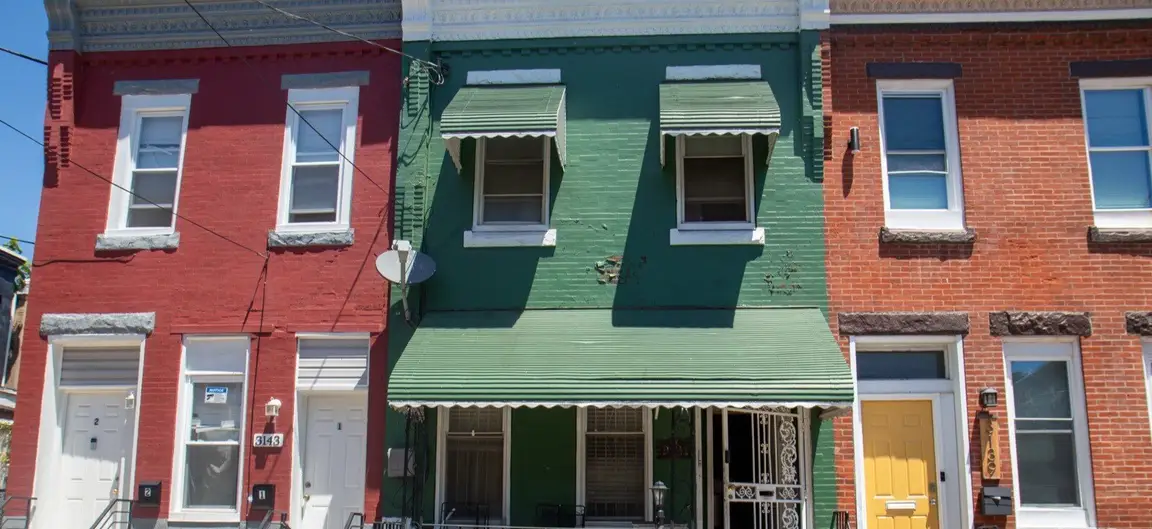
This is the specifically Philadelphia part. Most of our housing stock is attached rowhomes sharing party walls, which means your fire was almost certainly your neighbors’ fire too — smoke, suppression water, and structural damage to a wall that legally isn’t only yours. It runs the other way as well: if the house next door burned and gets demolished, an unbraced party wall can leave your side exposed or at risk. The repair scope on an attached fire-damaged rowhome is rarely limited to your four walls — which is why contractor estimates come back higher than owners expect, and why some renovation quotes never turn into actual work.
If L&I has posted the property
After a significant fire, L&I inspects and may designate the building unsafe or imminently dangerous — and with the second one, the city can move toward demolition and lien you for the cost. That whole clock, including the appeal window and what happens to violations at a sale, lives in our condemned-house guide. The short version: designations don’t stop a sale, but deciding early keeps more options open.
Rebuild, or sell it as it stands?
Rebuilding is the right answer when the claim genuinely covers the scope, you can float the gaps between insurance draws, and you can carry a months-long project on a house you can’t live in. Selling as-is is the honest answer when the settlement falls short, the mortgage keeps accruing, or the party-wall scope keeps growing — the same fix-or-sell math we lay out in our repairs guide, with fire’s extra wrinkle: on the open market, almost no retail buyer can finance a burned house, so you’re reaching cash buyers anyway — just slower.
Can you sell with an open insurance claim?
Usually, yes. The claim and the property are separate things: in many sales the seller keeps the right to the claim proceeds and the buyer takes the house in its damaged condition; in others the claim is assigned and reflected in the price. What matters is that it’s in writing, the escrow-law sequence is respected, and the lender’s payoff is coordinated at closing. Tell any buyer about the open claim up front — one who does this regularly will know how to structure it; one who doesn’t will fall apart late.
Two practical pieces while you decide
- The fire report. Your insurer will want the Philadelphia Fire Department’s incident report — generated automatically whenever PFD responds. Order it online at the city’s public-safety-reports portal; the paper route through the Department of Records (City Hall Room 170, (215) 686-2266) is much slower.
- If your family was displaced: the American Red Cross runs Red Cross House at 4000 Powelton Avenue — no-cost short-term recovery housing for fire-displaced families, with meals and a caseworker, reached by referral through the responders who came to your fire (intake (215) 299-4889). Nobody should have to make a real-estate decision from a shelter cot.
How we buy fire-damaged Philadelphia houses
We buy burned, smoke-damaged, and water-damaged houses across Philadelphia exactly as they stand — attached rowhomes with party-wall scope, open L&I violations, houses sitting since the fire. Nothing to fix, nothing to haul out, nothing to pay us: no fees or commissions, and we typically cover the standard seller-side closing costs specified in our agreement. We coordinate the lender payoff, the escrow-law sequence, and the claim structure; a written offer usually within a day, and the closing date is yours to set. A number from us is free information — it prices the “sell it as-is” column before you sign a contractor’s proposal, and here’s the math behind it.
Related situations we handle: houses with L&I code violations and vacant houses — fires often produce both at once.
This page is general information about the process in Philadelphia — it is not legal, insurance, or tax advice. Your policy language and your specific case control. Talk to your adjuster, a public adjuster, or an attorney about your situation.
Want to know what your fire-damaged house is worth exactly as it stands? Request your as-is cash offer, or call or text (215) 515-7799.
Frequently Asked Questions
Do you buy houses with major structural fire damage?
Yes. Roof gone, floors compromised, gutted to the studs — condition doesn’t disqualify a property, including attached rowhomes where the party wall is involved. We’re pricing the land and the rebuild, not the finishes, so there’s no such thing as “too damaged to bother calling.”
Why is the city holding part of my insurance money?
That’s Pennsylvania’s fire insurance escrow law: on larger claims, delinquent city balances are paid from the proceeds first, and on severe losses a slice is escrowed with L&I until the property is repaired or demolished — then returned. It’s a checkpoint, not a penalty. We structure purchases around it routinely; this is general information, not legal advice.
Can I sell before my insurance claim is settled?
Usually yes — you may keep the right to the proceeds or assign the claim as part of the sale. Either way it’s written into the agreement and the lender’s payoff is handled at closing. Bring the claim up in the first conversation.
What if L&I has already issued violations or declared it unsafe?
That’s normal after a fire and it doesn’t stop a sale — we buy with open violations in place. If the property has been declared imminently dangerous, time matters more, because the city can move toward demolition and lien the cost. Our condemned-house guide covers that clock in detail.
How fast can this be over?
A written as-is offer usually within a day. Settlement follows title work — as little as two weeks when title is clean, longer when an estate or the escrow sequence is involved — and we’ll tell you which case you’re in up front.